Little Kitten Maiden Grass vs Pampas Grass: Size and Plumes
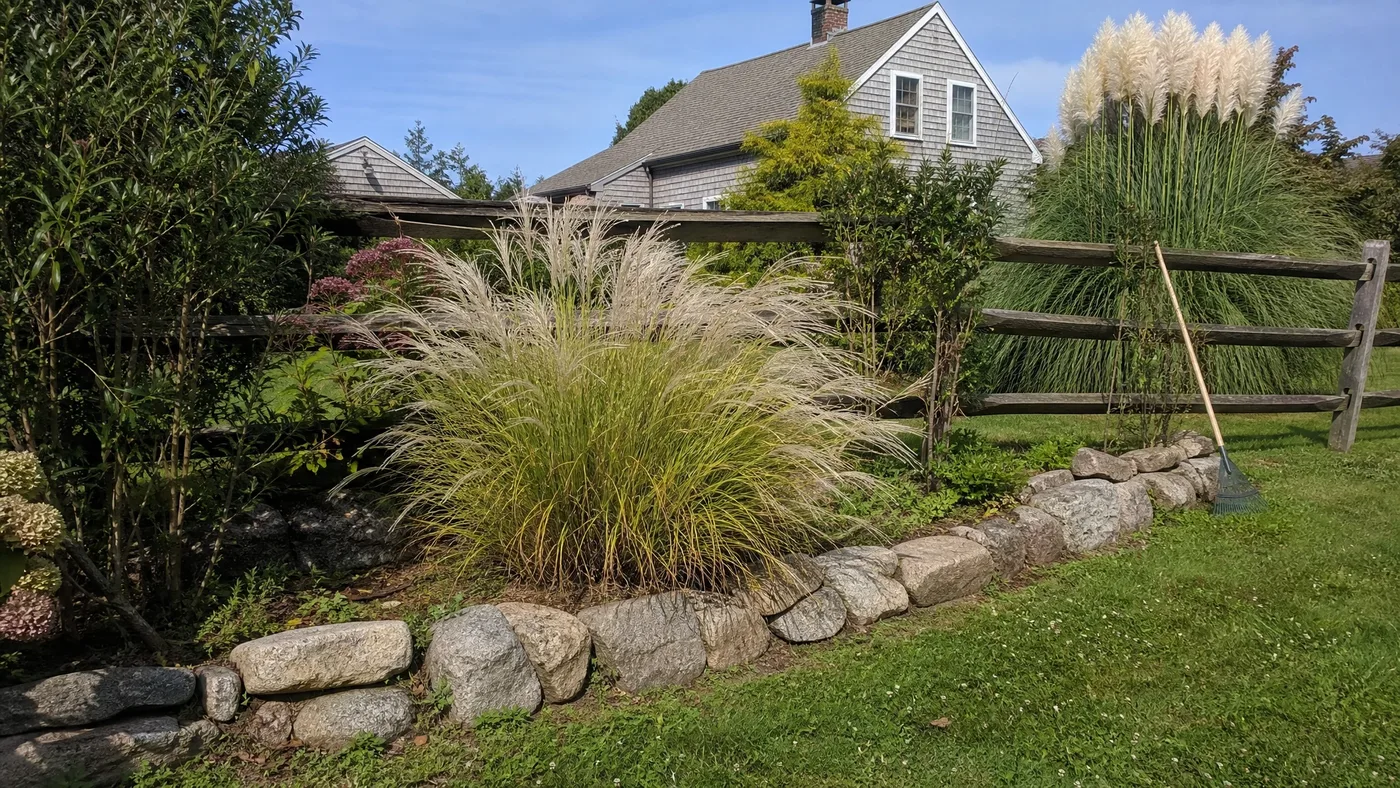
Late one autumn we stood in a neighbor's yard looking up at a pampas grass that towered over the fence, its creamy plumes swaying against a gray sky. A few days later a customer in our rows pointed at a Little Kitten and asked whether it would grow into something like that. It will not, and the reason is the surprising part: Little Kitten is not a young pampas at all but a maiden grass from a different genus, and it stays around 3 to 4 feet tall with its plumes.
This guide covers everything you need to know about telling the two grasses apart, from genus and plume shape to mature height, garden value and the planting rules that do and do not carry over. We take each common belief in turn and settle it. Get it wrong and you plant a giant where you wanted a tidy edge, or the reverse.
Is Little Kitten Maiden Grass Just a Small Pampas Grass?
No, and the gap is wider than height. Little Kitten is a cultivar of Miscanthus sinensis, the maiden grass, while pampas grass is Cortaderia selloana, which sits in a different genus altogether. Both make arching clumps topped with feathery plumes, and that shared silhouette is where the confusion starts.
The mix-up is old and common. Purdue notes that maiden grass is often incorrectly sold as pampas grass, so a loose tag or an offhand label can send you home with the wrong idea of what you bought. What we tell customers is to trust the botanical name on the pot, and the one you want here reads Miscanthus sinensis 'Little Kitten'.
Miscanthus is native to eastern Asia, including Japan and China, and Little Kitten is a compact selection of that species. It keeps the species' habit of a clump that widens in place and gives up most of its height. Nothing about it is a scaled-down pampas, so waiting for it to grow up into one is waiting for something it was never built to do.
How to Check What You Are Buying
Ask for the botanical name and the mature height, and compare them with what you want. A tag that promises 6 to 10 feet describes a pampas, and a tag that says 3 to 4 feet with plumes describes Little Kitten. If the label says only "ornamental grass" or "pampas type," keep looking.
A young plant in spring will not settle the question for you, because neither grass shows its plumes until late in the year. That is why the name matters more than the look of the foliage, and why we would rather you ask twice at the counter than wait until autumn to find out.
Little Kitten Maiden Grass and Pampas Carry Different Plumes
Put the plumes side by side and the two grasses stop looking alike. Pampas carries large, creamy plumes that read as big soft feathers from across a yard. Little Kitten carries slender, silvery-white plumes that rise above the foliage in mid to late autumn and last a long time.
Color is where the cultivar departs from its own species, too. Louisiana State University describes the species' plumes as appearing in late summer in silvery-white, gold and coppery-red, and the plain species often shows pinkish tones. Little Kitten sits at the silvery-white end of that range, so a pink plume on a tag belongs to a different plant.
Timing differs as well. The species can flower anywhere from August to November, but Little Kitten holds back until mid to late autumn, which means the plumes arrive when the garden is winding down and the light is low. Its foliage turns golden around the same time, and the silver plumes stand out against it.
Seen Up Close Versus Seen From Afar
A pampas plume is meant to be seen at a distance and from below, a bold flag over a fence line. Little Kitten's plumes sit at roughly waist height, so you see them at arm's length from a path or a patio chair, where their slender shape and silver sheen are easy to appreciate.
For a closer look at how the color changes from first bloom to winter, our bloom time and plume color guide follows the plumes through the season.
Little Kitten Maiden Grass Will Never Reach Pampas Height
We start with how Little Kitten compares in size to pampas grass and the maiden grass species, with the figures set side by side so you can see where it falls. Then we explain why that height is fixed for the cultivar and what changes as the plant matures.
What the Numbers Say
Here is the comparison most customers are really asking for. Little Kitten measures about 3 to 4 feet tall including its plumes and about 3 feet wide, while pampas grass commonly runs 6 to 10 feet. The table puts them next to the maiden grass species so you can see where the cultivar falls.
| Grass | Height | Plumes |
|---|---|---|
| Little Kitten Maiden Grass | 3–4 feet with plumes, about 3 feet wide | Slender, silvery-white |
| Miscanthus sinensis species | 4–12 feet | Silvery-white, gold or coppery-red |
| Pampas grass | 6–10 feet | Large, creamy |
Even the species figure is worth a look. North Carolina State Extension lists 4 to 12 feet for Miscanthus sinensis, so the cultivar is deliberately at the bottom of its genus' range, not an immature plant waiting for years to catch up.
Why It Will Not Catch Up
Height in a named cultivar is a fixed trait, not a stage. A Little Kitten in its fifth season is the same height as one in its third, and what changes is the clump, which fills out toward that 3-foot width and carries more plumes. Good soil and sun make the plumes fuller, but they do not stretch the plant.
Fertilizer will not change this either, and extra feeding tends to give you floppy leaves rather than a taller grass. If you want the full picture of size from the first year on, our guide on how big Little Kitten gets walks through it.
Does a Bigger Plume Make a Better Plant?
We do not think so. A big plume is dramatic in a large space and awkward in a small one, while a slender plume works nearly anywhere. What counts is the whole plant over many months, not the peak week.
Where the Smaller Plume Wins
Little Kitten keeps its show going longer than you might expect. Colorado State Extension notes that Miscanthus has silky flower tassels that persist into winter, and Little Kitten's silvery-white plumes are known for lasting well after the first frost. Add golden fall foliage and you have a plant that looks finished from autumn straight through to cutting time.
It also fits places a tall grass cannot go. At 3 to 4 feet it sits comfortably at the front or middle of a border, beside a path or near a window, without blocking a view. It handles full sun to part shade and, once established, drought, so it asks little of you after the first season.
Upkeep scales with size, too. A clump about 3 feet wide is a short job with hand pruners or shears in late winter, with no ladder, no gloves up to the elbow and no wrestling a giant out of the bed. Over the years that ease is worth more than any plume.
Where Pampas Still Makes Sense
Pampas is the right choice only if you have the room and want a living screen or a single bold statement. If you have a wide yard, a tall fence to soften or a corner that needs height, nothing about Little Kitten will do that job. We would not talk you out of pampas in that spot, but for a typical home border, a patio edge or a small bed we choose Little Kitten every time.
Pampas Rules and Little Kitten Maiden Grass Planting
Many customers arrive with pampas advice in hand and ask whether it applies. Some of it does, because both are sun-loving ornamental grasses, and some of it would only waste your effort or your space. Sorting the two takes a minute and saves a replant.
Rules That Carry Over
These pieces of advice hold up for Little Kitten without changes:
- Plant in full sun. Little Kitten is listed for full sun by the Kansas State turf trials, and its flowering is strongest with plenty of light.
- Give it a well-drained spot. Wet feet in winter are harder on a grass than cold, and a raised bed fixes a heavy site.
- Water it deeply through the first season, then ease off. Once established the genus is drought tolerant, so a settled clump does not need a schedule.
- Check your cold limit. Kansas State lists Little Kitten for Zone 5, so colder gardens should confirm with a local extension office.
Rules to Leave Behind
These do not carry over, and following them would make the planting worse:
- Do not leave a pampas-sized gap. Plan around a clump about 3 feet wide, not a plant that swallows a corner of the yard.
- Do not place it at the back of the border expecting height. At 3 to 4 feet it belongs toward the front, where its plumes can be seen.
- Do not dread the cut. A compact clump is a short job each year, and our guide to when and how to cut it back covers the timing.
For the hole, depth and spacing details, follow our planting guide and leave the pampas instructions on the shelf.
What Our Old Border Settled About Pampas
In our rows we once kept a border with a tall pampas at the back and a line of Little Kitten along the front, and it taught us more than any tag could. In spring the Little Kitten clumps were low tufts of fresh green while the pampas was already a wall. By summer the small grasses had filled into neat mounds, and in mid to late autumn they sent up silvery-white plumes just as the pampas shed its creamy ones over our heads.
Winter was the telling season. The pampas leaned and thinned, and the Little Kitten stood upright with its plumes still catching the light, golden foliage and all. Neither one ever looked like the other's younger self.
The settled picture is simple. Pampas is a screen and a statement for big spaces, while Little Kitten is a border plant that gives a long autumn and winter show at a human scale. For ideas on what to plant beside it, see our landscape ideas and companions guide.
Two Grasses That Never Meet in Size
Little Kitten is a Miscanthus, pampas is a Cortaderia, and no amount of time turns one into the other. Expect 3 to 4 feet with slender silvery-white plumes from Little Kitten and several times that from pampas, so choose the one that fits the space you actually have. Plant it in sun, give it drainage, and then leave it alone.
One still late-autumn evening comes back to us each year: the neighbor's pampas plumes far overhead, and Little Kitten in our rows glowing silver at waist height, the two sharing the same light and nothing else. We have never once thought of them as the same plant.
Little Kitten Maiden Grass
Nursery-grown Little Kitten Maiden Grass in sizes from 3 Gallon, shipped to your door.
From $69.97
Shop Now →Little Kitten stays compact in the full sun and fast-draining ground of our own fields, which suits a grass you plan to keep at 3 to 4 feet. We raise top-quality grasses and other plants as a small, family-scale business, tending them ourselves from start to finish. If this is the size and plume you want rather than pampas, come have a look at our shop when you are ready to plant.