
Growing Little Kitten Maiden Grass in Coastal Gardens
A Little Kitten crown is a tight knot of fine roots and short shoots, and that small engine can only do so much. Put it in the wrong spot and salt wind scorches the leaf tips brown, the crown dries out between gusts, and the shoots come up thin the following spring. Put it in the right spot and the same crown shrugs off the weather, sending up a mound of foliage topped with silvery-white plumes.
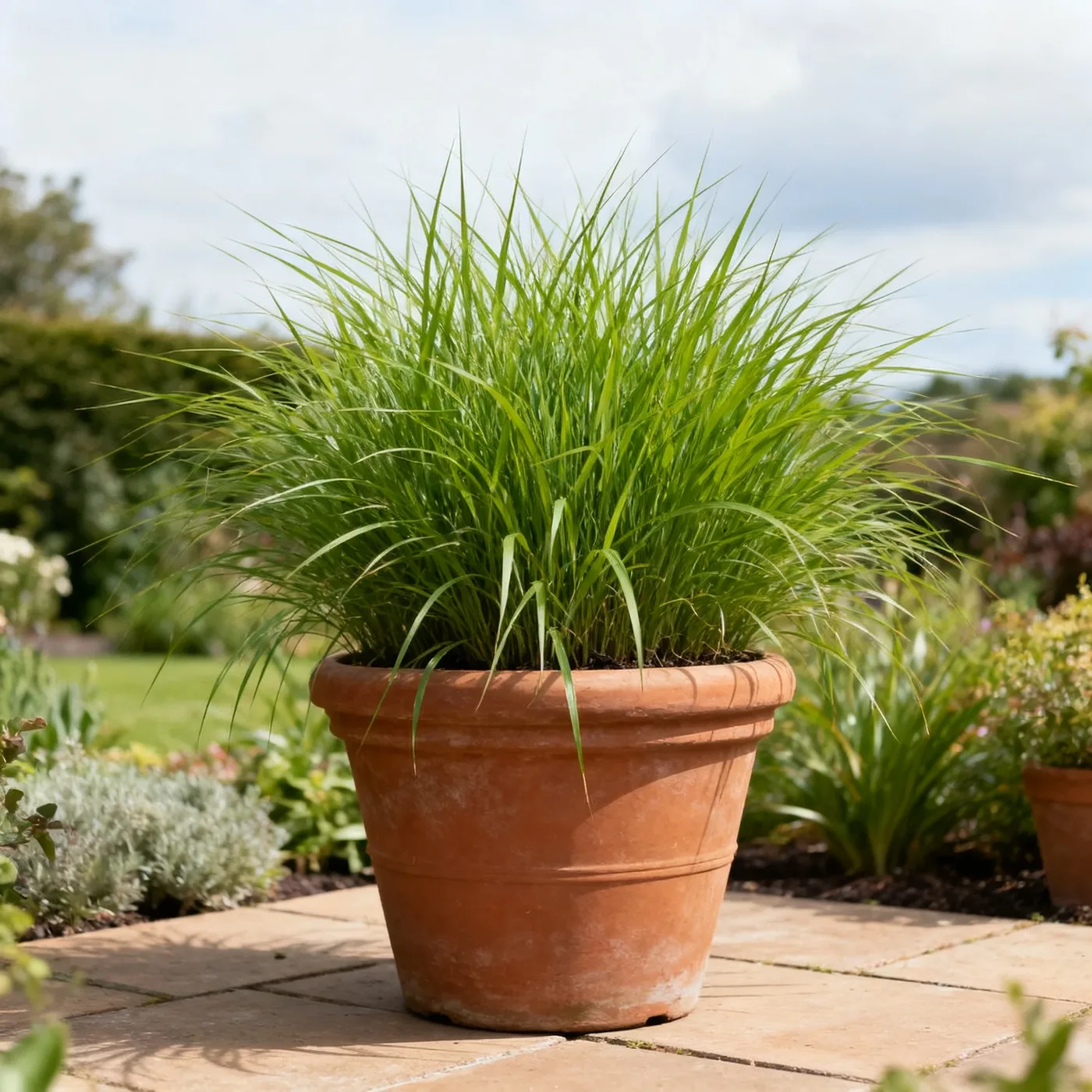
In this article, we'll go through how the plant's own biology handles wind and spray, how to judge the exposure in your yard, and the order of steps from the day the pot arrives to the first storm.
Little Kitten gives a shore border a low, steady shape. It does that best when you site it with its limits in mind.
Why Little Kitten Maiden Grass Stays Low in Wind
Plant a Little Kitten beside a full-size maiden grass on a blustery day and watch which one thrashes. The tall plant whips its whole canopy back and forth. Little Kitten rocks a little and stays put. Height is the difference. Wind pushes harder on a tall, wide canopy and swings it from a long lever, while a short mound gives a gust far less to grab.
Short Shoots From a Tight Crown
Little Kitten is a clump-forming, warm-season grass. Each spring new shoots rise from the crown and fan out into an arching mound about 3 to 4 feet tall and 3 feet wide, plumes included. The species, by contrast, runs 4 to 12 feet tall, so a full-size plant can carry up to three times the height into the same wind.
The foliage is flexible and moves easily in a breeze, which helps further. Blades that bend give way to a gust instead of fighting it, and on a short plant that bending happens close to the crown.
The Plumes Are the Tallest Part
Little Kitten blooms in mid to late autumn, later than the species, which flowers from August to November. The silvery-white plumes stand above the foliage and last into winter. They are the most wind-catching part of the plant, and they open just as autumn storms begin.
Expect plumes to lean and tatter in a hard blow. That is cosmetic. The crown below stays rooted and the mound stays upright.
Fine Roots, Dense Crowns and Salt Spray
Salt spray burns leaf tips. You can see it on any hedge facing the water: one side brown and crisped, the lee side green. Little Kitten shows the same pattern on a smaller scale, and we would rather be straight about its limits. UF/IFAS rates the species' soil salt tolerance as poor, and we have no reason to think this cultivar breaks that rule.
What the Crown Does Well
Grasses grow a mass of fine, fibrous roots instead of a few thick ones, and Little Kitten packs them into a compact crown. The root mass grips sand and holds the plant steady in a gust. The dense crown also keeps new shoots clustered together, shaded by older blades, where they lose less moisture to drying wind.
The blades themselves are expendable. You cut the plant back every year anyway, so spray-scorched tips go out with the old growth. Our guide to when and how to cut back Little Kitten covers the timing.
What It Cannot Do
Fine surface roots take up whatever is in the sand, salt included. In a bed that sits in the spray zone, salt builds between rains and the roots feel it first. One of the most common questions we get is whether Little Kitten can go right at the water's edge.
What we tell customers is no. You will hear that ornamental grasses are tough coastal plants that can go anywhere on the shore. Where salt is concerned, we disagree, and we site Little Kitten behind a fence, a wall or a hardier planting, never in front of them.
Little Kitten Maiden Grass Against Lodging and Flopping
Walk past a stand of tall maiden grass after a late-autumn gale and you will often see clumps splayed open, with stems lying flat from the center outward. That is lodging. Tall stems carry weight high above the crown, and wet foliage and heavy plumes add to the load. Little Kitten has less height to topple, so the mound stays upright and closed.
Age adds to the problem in taller plants. UF/IFAS notes that three- and four-year-old plants of the species tend to flop over and may thin in the center, and that dividing or cutting them back restores upright growth. A compact cultivar starts with better posture, but you should still watch for an open center as the clump ages.
Skip the Stakes
Staking and ringing are the standard advice for maiden grass near the shore. For Little Kitten, we skip both. A stake gives the wind something to rattle and rubs the blades raw. A 3-foot mound that needs a ring is a plant in the wrong spot, and moving it works better than propping it.
When the Center Opens Up
If a mature mound starts to thin in the middle, divide it in spring, which is how the species is propagated. Lift the clump, split it, replant the vigorous outer pieces and discard the tired center. Each piece restarts with a tight crown, and the mound returns to its upright shape.
Reading Your Yard's Wind and Salt Exposure
Before you pick a spot, look at what the wind has already done. A white crust on the windows facing the water means spray reaches the house. Trees bent into a permanent lean, shrubs scorched on one side only and sand drifting into beds tell the same story. Walk the yard after a blow and note where each sign stops.
Sort what you find into three bands, then match the plant to the band.
| Exposure | What you see | Little Kitten |
|---|---|---|
| Front line | Salt crust on glass, scorched leaves on the water side, blowing sand | Do not plant here |
| Second row | Steady wind, little crust, neighbors green on all sides | Good spot in full sun |
| Lee side | Shelter from a house, fence or established planting | Works well and adds shape |
Check Your Zone Too
K-State lists Little Kitten at Zone 5 at the cold end, and the species grows through zone 9. Many coastal yards sit toward the milder end of that range, but winter lows vary along any shoreline. Check with your local extension service and read our guide to Little Kitten hardiness zones before you commit.
Setting Little Kitten Maiden Grass in Sandy Coastal Soil
Dig a hole in shore sand and the sides slump in, water vanishes in seconds and the digging is easy. That ease is the good news. Maiden grass wants drainage, and sand supplies it. A related Miscanthus cultivar is reported to do well in sandy beds as long as drainage is adequate, and the species is known to cope with poor, lean ground.
The catch is water and nutrients. Sand holds little of either, so a new plant dries fast until its roots spread. Once established, maiden grass is very drought tolerant, but that applies to the second season and later, not to the first.
Improve the Planting Hole Lightly
Mix a modest amount of compost into the backfill so the root ball has something to hold moisture. Do not try to turn the bed into rich loam. The plant does not need it, and you would be fighting the sand every year. Our guide to the best soil for Little Kitten goes deeper.
Placement and Light
Give it full sun, meaning at least six hours of sunlight. Little Kitten tolerates part shade, and on the lee side of a house that is a fair trade for shelter. Set plants about 3 feet apart so the mounds just touch at maturity and shield each other from gusts.
A Planting Sequence From Delivery to First Storm
A box left on the porch in the sun is where many plantings go wrong, long before any wind arrives. The order of steps matters more than any single one, so treat this section as a checklist. Our plants ship in their pots, and the first job is to get them out of the box the day they arrive.
From Box to Bed
Plant in spring if you can, so the crown has a full season to root before autumn storms. Then work through these steps in order.
- Unpack the plant the day it arrives, set the pot upright in a sheltered spot and water until the root ball drains freely.
- Harden it off for a few days by setting the pot at the planting site, out of direct wind, so the blades meet the weather gradually.
- Dig the hole as deep as the root ball and wider, and loosen the sides so the roots can leave the shape of the pot.
- Set the crown level with the surrounding sand. Too deep buries the shoots, and too shallow exposes the crown to wind.
- Backfill, firm the soil gently, and water slowly until the whole root ball is soaked.
- Mulch around the plant, keeping it off the crown, to slow evaporation and hold the sand in place.
Our planting walk-through covers the hole in more detail.
Through the First Storm Season
Water deeply and less often through the first season, so roots follow moisture down instead of hugging the surface. Our watering guide sets out the pattern.
Before the first autumn storm, check that the mulch is in place and the crown is covered. Then leave the plant alone. Do not tie it up or trim the plumes. If salt spray coats the foliage, a rinse with fresh water afterward helps. In late winter or early spring, cut the foliage down before or just as new blades appear.
Little Kitten Maiden Grass Holds the Shoreline Border
Little Kitten earns its place in exposed beds by being small where the wind is big. A 3 to 4 foot mound with flexible blades and silvery-white plumes gives gusts little to push, and the compact crown keeps it standing where taller maiden grasses lodge. Its limit is salt. The species rates poor for soil salt tolerance, so keep it off the front line. Site it by exposure, plant it in sequence, and the shore wind will find little to push around.
Little Kitten Maiden Grass
Nursery-grown Little Kitten Maiden Grass in sizes from 3 Gallon, shipped to your door.
From $69.97
Shop Now →Along our farms, Little Kitten is raised in sunny, free-draining ground, which is the footing we would give it in a shore border too. Growing top-quality grasses is what our small business does, and every plant comes from land we tend ourselves. Whenever you are ready to plant along your coast, come take a look at what we have.