Little Kitten Maiden Grass vs Liriope: Grass or Lilyturf
A naturalist crouched at a nursery bench once, hand lens out, comparing two pots of arching green leaves. Both tags said grass. Only one plant was. The other belonged to the asparagus family, a lilyturf dressed as a grass.
That is the mix-up behind this guide. Little Kitten Maiden Grass and Liriope end up shelved together as small grassy edging, then get planted as if they wanted the same things. One of them then sulks in shade or gets cut back at the wrong time.
This article talks about how to tell the two plants apart by what you see in the garden and answers the questions customers ask us most. Read on to learn what evergreen leaves, purple spikes and silver plumes each give away, how the two spread, which wildlife visits each, and which one we would choose.
When the Tag Says Grass but the Roots Say Lily
Little Kitten is Miscanthus sinensis 'Little Kitten', a true grass in the family Poaceae. It forms a clump about 3 to 4 feet tall and 3 feet wide, plumes included. That is far shorter than its species, which runs 4 to 12 feet.
Liriope is a different kind of plant altogether. The NC State extension lists lilyturf as a member of the Asparagaceae (asparagus) family, a broadleaf evergreen perennial. It is a relative of asparagus, not of any grass.
The confusion is easy to understand. Both plants throw up narrow, arching, strap-shaped leaves, and both get sold for edging. But they come from different branches of the plant world, and that decides almost everything about how they live.
Why the Look-Alike Works
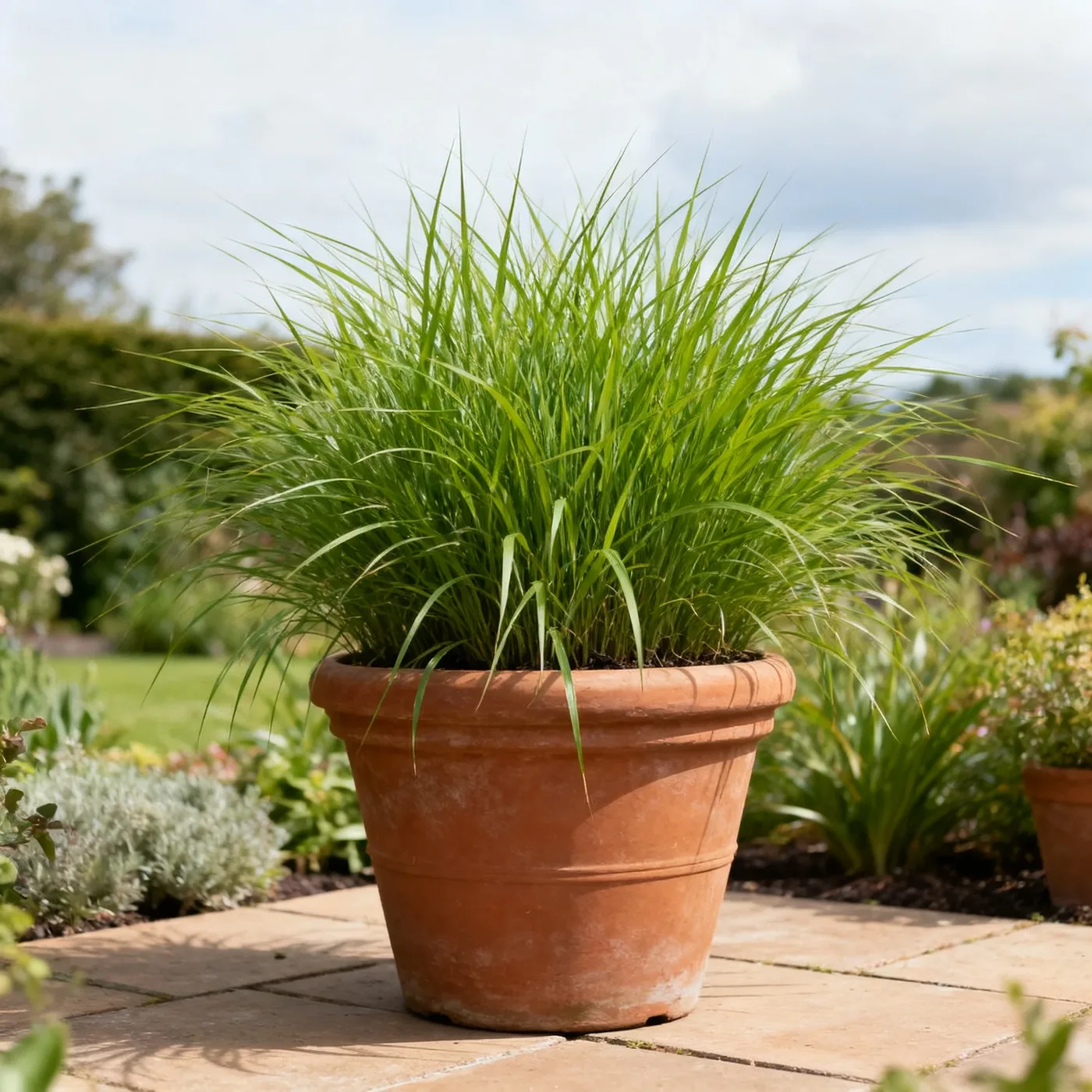
Lilyturf leaves rise as a fan from a crown close to the soil. Little Kitten's blades are finer and lighter, and they build into a taller, airier fountain. Side by side in a pot, you can often tell by habit alone. In a plain green leaf, with no flowers, it is easier to be fooled.
We grow and sell Little Kitten, so this is a question we gladly answer at the bench. If you want the full size picture first, our guide on how big Little Kitten Maiden Grass gets covers it. The rest of this page works from the things you will actually notice.
Evergreen Leaves in January Aren't Little Kitten Maiden Grass
If a clump is still green in the dead of winter, you are looking at lilyturf. Liriope keeps its leaves all year across its hardiness range, which NC State lists as zones 5 to 10. Little Kitten does not. It is a warm-season grass, so it grows hard through summer, turns golden in fall and then goes fully dormant.
The cause is simple. Warm-season grasses shut down when the soil cools and the days shorten. The blades fade to straw, and the plant waits at the crown for spring. There is nothing wrong with it. A tan clump in January is a healthy Little Kitten at rest.
What the Dormant Clump Gives You
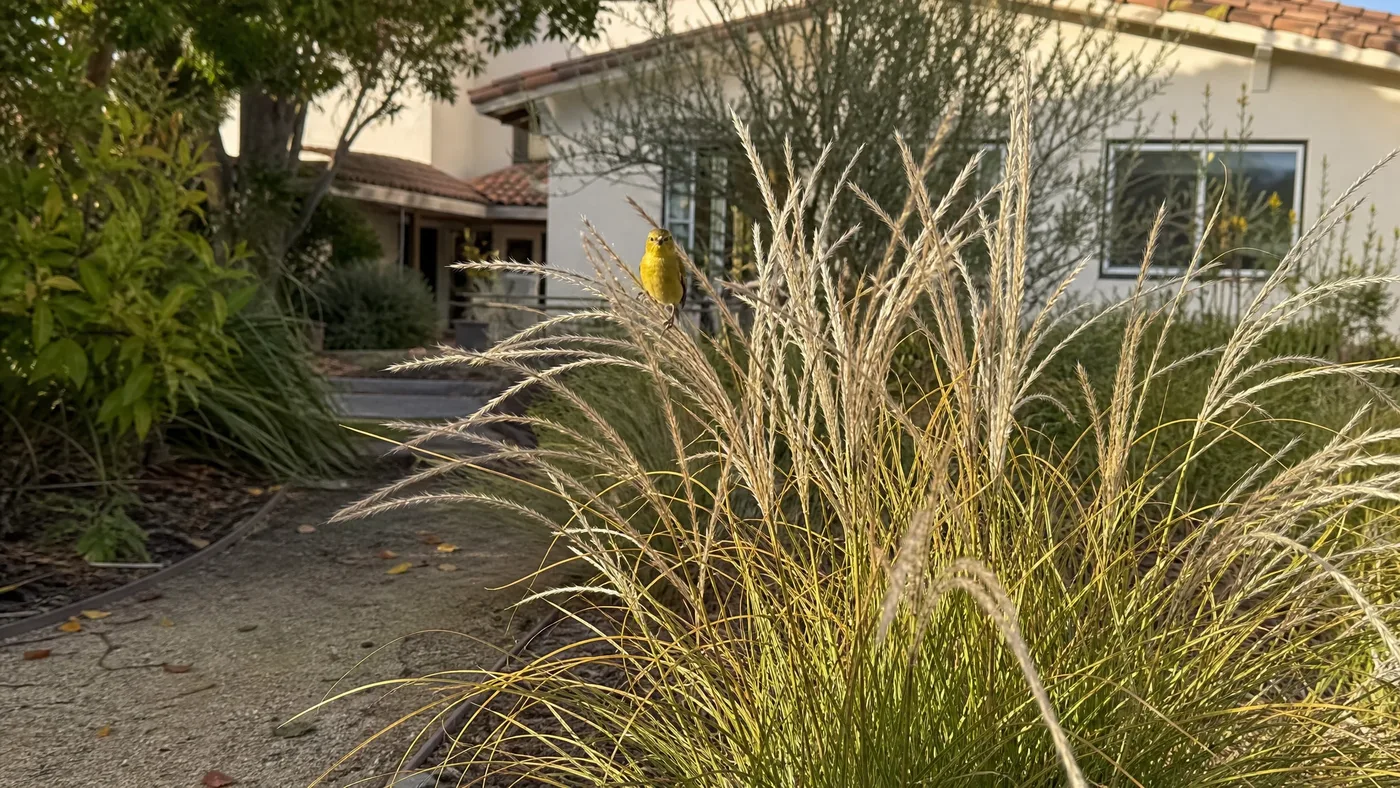
The foliage fades, but the plumes keep going. Colorado State Extension notes that miscanthus flower tassels persist into winter, and Little Kitten's silvery-white plumes hold up well against frost.
The fix for a dormant clump is to wait. Leave it standing through winter, then cut it to the ground in late winter before new shoots appear. Our guides on when and how to cut back Little Kitten and winter care give the details.
Liriope is the opposite. You cut it back to the ground each February, before new growth begins, which is the recommended practice and not something to avoid.
Where the Cold Line Falls
Winter behavior also changes where each plant makes sense. Little Kitten is listed to Zone 5 at its cold limit, and its species is reported hardy as far as zone 4 in some references. Liriope covers the same cold edge but reaches into zone 10, where a warm-season grass has far less to offer. In a mild climate, check with your local extension service before choosing between them.
Purple Flower Spikes in Late Summer, Not Plumes
Walk a border in late summer and look for color. Spikes of small violet flowers standing among the leaves mean Liriope. They look like tiny grape hyacinths on a stalk, and they sit down in the foliage rather than floating above it. The flowers fade into dark berries that hang on the stalks after the color is gone.
One of the most common questions we get is whether the purple spikes in a neighbor's border will come with our plant. They will not. Little Kitten never makes a violet spike or a berry. It makes plumes, and the plumes arrive later, in mid to late autumn.
That timing gives you a quick test. When the lilyturf is in flower, Little Kitten is still all leaf, a green fountain with its plumes yet to come. By the time the plumes open, the violet spikes have long since turned to berries.
Why the Flowers Differ so Much
The flowers differ because the families differ. Lilyturf belongs to a group of plants with small, showy, six-parted flowers built to be seen by insects. A grass's flowers are tiny and bare. They have no petals to speak of and rely on wind to carry pollen. The feathery plume is simply a mass of those small flowers held on a long stem.
What to Do With the Difference
If purple matters to you, buy Liriope and give it the shade it tolerates. If you want height and a luminous late-season haze, buy Little Kitten and give it sun. Do not plant one expecting the other's flowers, because no amount of fertilizer will turn a grass into a lily relative.
Little Kitten Maiden Grass Plumes Mean a True Grass
Feathery, silvery-white plumes standing well above the leaves are the signature of Little Kitten, and they come from a plant with a long wild history. Chinese silvergrass, the species behind this cultivar, is native to Asia, with a range that takes in Japan, Korea and eastern China. In the wild it grows in open, sunny places, and that explains the cultivar's habits in a garden.
The species flowers from August to November, with pinkish plumes. Little Kitten is more compact and more selective: it blooms in mid to late autumn and its plumes are silvery-white. That timing is one more way to separate it from the wide-ranging species. Our bloom time and plume color guide follows the season week by week.
What the Native Habitat Tells You
Wild silvergrass tends to turn up on roadsides, railroad banks and steep embankments, where the soil is light, well drained and low in nutrients. A plant shaped by that kind of ground does not want rich, soggy beds. It wants sun and drainage, and once established it is very drought tolerant. Lilyturf is far happier in the dimmer, gentler corner where this grass would flop.
Shade gives you leaves from a miscanthus, but fewer flowers and a floppier habit. Heavy feeding does the same. If your plumes are thin, look at the light before you reach for the fertilizer.
How the Plumes Age
The plumes begin soft and silvery, then dry in place and hold their shape for weeks. If you see that look on a plant in a catalog and the foliage is an arching fountain with golden fall color, you are looking at a miscanthus, not a lilyturf.
Spreading Runners or a Tidy Clump?
Little Kitten is a clumping grass. Its crown widens slowly, to about 3 feet across, and it does not send out runners. Lilyturf depends on the kind. Some are clumpers, and some spread by underground stems and fill in as a groundcover. When you buy Liriope, check the tag for which kind you have, because they behave very differently in a bed.
Here is how the two compare in the garden, based on what you will see and what each needs.
| What you notice | Little Kitten | Liriope |
|---|---|---|
| Plant family | Grass (Poaceae) | Asparagus family (Asparagaceae) |
| January leaves | Tan, dormant, cut in late winter | Green all winter |
| Flowers | Silvery-white plumes, mid to late autumn | Violet spikes, then dark berries |
| Light | Full sun for best plumes | Shade tolerated |
| Spread | Slow, tidy clump about 3 feet wide | Clumper or runner, depending on the type |
Light is where mismatched plantings fail most. Grasses of this kind need at least six hours of sunlight. Our guide to Little Kitten sun requirements explains how much slack you have.
Edging or Border Plant?
The phrase "small border grass" misleads people here. At 3 to 4 feet tall and about 3 feet wide, Little Kitten is not a tight edger. It is a middle-of-the-bed plant, a fountain that needs room to arch. Liriope is the one that sits politely along a path.
Here is what we tell customers to do:
- Give Little Kitten a sunny, well-drained spot with room to reach about 3 feet across, and leave it alone.
- Put shade-bound edging in the shade, and choose a clumping lilyturf if you want it to stay where you put it.
- Do not mix them in one narrow strip. Their light needs and winter looks pull in opposite directions.
Birds and Insects at Little Kitten Maiden Grass
The two plants feed wildlife in different ways, and watching who visits is a fair identification trick. Little Kitten is a wind-pollinated grass, so it offers no nectar. What it gives is structure. Its dense crown and standing stems make cover for small creatures, and the dried plumes give birds something to perch on through the cold months.
Seed Heads and Winter Cover
In our rows, the clumps left standing through winter are the ones that look alive in February, with small birds working through the stems and insects tucked into the base. We cannot promise a seed feast, and we would not plant it for that alone. Leaving the clump up until late winter is the kindest thing you can do for whatever is sheltering inside it.
Pests rarely trouble it. Deer tend to pass it by, and extension sources say no pest or disease is of major concern, though rust occasionally shows on the foliage.
One honest note from the ecology side. Miscanthus is an Asian native, and extension programs in some states list the wild species as invasive because it self-seeds. Little Kitten is a cultivar, but if you garden next to open land, ask your local extension service how the species behaves there.
Nectar and Berries on Lilyturf
Liriope plays a different role. Its late-summer flower spikes draw bees and other small pollinators, and the dark berries that follow can attract birds. So if you see insects crowding violet spikes in September, you are watching a lily relative, not a grass.
For a pollinator edge, the lilyturf wins. For winter structure and shelter, Little Kitten does. In a mixed garden, they can sit in separate beds and each do its job.
Reading Little Kitten Maiden Grass and Lilyturf Correctly
Identify by what the plant does, not by what the tag says. Green leaves in January, violet spikes in late summer and dark berries mean Liriope, so plant it where light is limited.
Silvery plumes in autumn, golden leaves that fade to straw and a clump that wants cutting to the ground in late winter mean Little Kitten, which belongs in full sun with room to spread its arch. Choose the grass for height, plumes and winter shelter, and the lilyturf for shade, edging and year-round green. Look at what visits and what blooms, and the plant will tell you which family it belongs to.
Little Kitten Maiden Grass
Nursery-grown Little Kitten Maiden Grass in sizes from 3 Gallon, shipped to your door.
From $69.97
Shop Now →We grow Little Kitten on our farms in full sun and well-drained soil, the same conditions it wants in your garden. Customers come back to us for a tidy, silvery-plumed clump that asks for very little. We are a small team of growers raising top-quality grasses and other plants, and you are welcome to pick out a plant for your own garden.