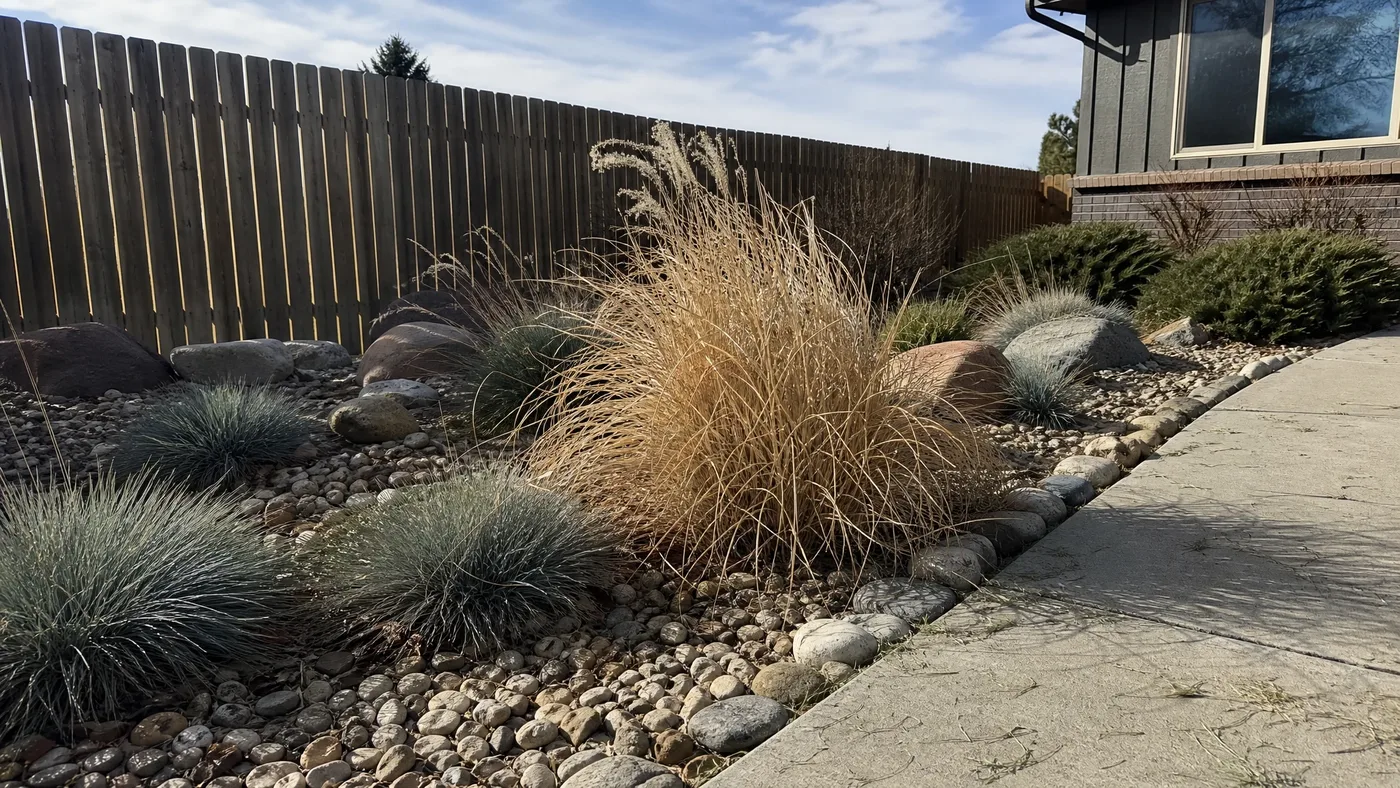
Little Kitten Maiden Grass vs Blue Fescue: Size and Season
Garden center tags love the word "compact," and they hang it on Little Kitten and on blue fescue as if the two were interchangeable. We doubt it. One is a clump of blue-gray needles about a foot high, and the other is a Miscanthus that stands several times taller once its plumes open. So instead of repeating the claims, we checked each one against the extension sources we trust.
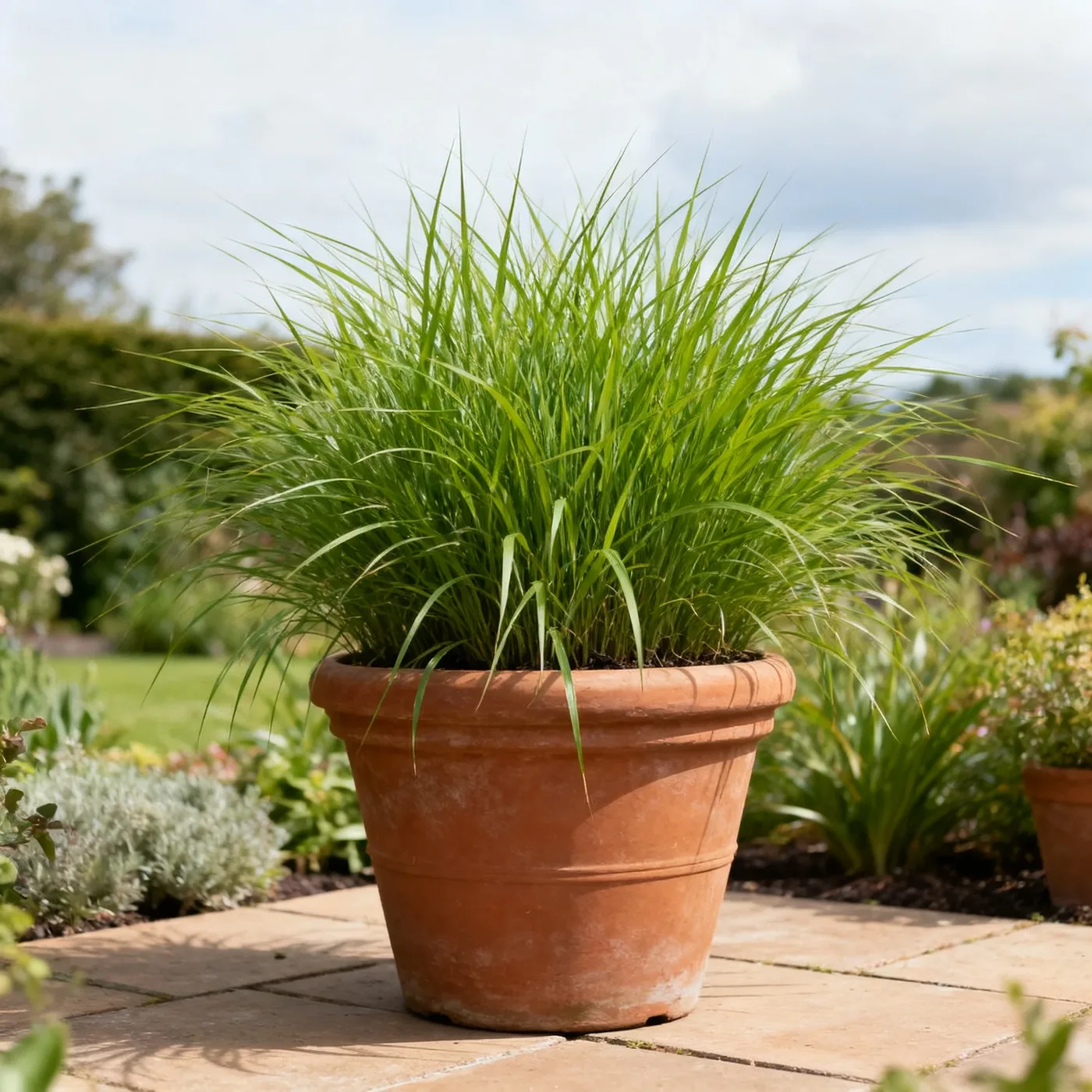
People expect a pint-sized edging grass from both. What you get is two plants with different seasons, different weak spots and different jobs. We'll walk you through size and hardiness, then heat, soil and yearly upkeep, then how each looks in winter, and finish with which grass we'd hand you for which spot.
Does Little Kitten Maiden Grass Really Stay Small?
Yes, for a Miscanthus. The species runs 4 to 12 feet tall, and Little Kitten sits at the small end of that family, about 3–4 feet tall and 3 feet wide with its plumes up. That makes it a small maiden grass. It does not make it a small grass.
The Fescue Yardstick
Blue fescue clumps grow 10 to 12 inches high with a similar spread, and Wisconsin Extension adds that they expand outward only very slowly. Put the two side by side and Little Kitten stands roughly three to four times taller and about three times wider.
The leafy mound sits lower than the plumes, so you can argue the numbers. We still count the plumes, because they are why most people buy the plant. Tags tend to measure Little Kitten against its giant relatives and stop there, which is where the confusion starts.
What That Gap Means for Placement
A fescue fits a 12-inch strip beside a path or a gap between pavers. Little Kitten needs a circle about 3 feet across to arch properly, and it will crowd anything planted tighter. Our guide to how big Little Kitten gets covers the full range.
Verdict on size: the "compact" tag is fair for blue fescue and stretched for Little Kitten. If you need true edging scale, fescue wins this round outright.
Hardiness Claims Tested Against Cold Winters
K-State lists Little Kitten at zone 5 as its cold limit. Wisconsin Extension rates blue fescue hardy in zones 4a to 8b. On paper, fescue reaches one zone colder. For the warm end of Little Kitten we lean on the species, which UF/IFAS and NC State both place through zone 9, while fescue stops at 8b.
The cold end of the species is less settled. UF/IFAS says zone 4, while LSU lists zones 6 to 9. When sources disagree like that, we plan around the cultivar listing and treat zone 5 as the safe floor.
Surviving Is Not the Same as Looking Good
Fescue is often sold as evergreen, but the Wisconsin sheet is careful. It stays green through winter in mild climates and may turn brown in harsher ones. So a fescue that survives a zone 4 winter can still look worn by March.
Little Kitten does not pretend. It is a warm-season grass that goes straw-colored and gets cut to the ground each late winter, so there is no green to lose. Zone 5 is the edge of its range, though, and we treat it as an edge, not a comfort zone.
What we tell customers in zone 4 is to choose fescue. Anywhere from zone 5 up, the two are on equal footing for survival, and our Little Kitten hardiness zones guide goes deeper on the range.
Verdict on hardiness: close to a tie. Fescue takes the coldest gardens, Little Kitten takes the warmest, and neither claim is false.
Heat, Humidity and Blue Fescue's Summer Slump
This is where the two grasses part ways. NC State describes blue fescue as a semi-evergreen, short-lived, cool-season grass, and it says the plant tends to decline in hot, humid summer months. Cool-season means it grows hardest in spring and fall, then sulks when nights stay warm.
Little Kitten is the opposite type. K-State files it as a full-sun, warm-season grass, so summer heat is its growing season. Its show comes late: plumes in mid to late autumn, then golden fall foliage.
Two Different Calendars
Fescue blooms from June to July, and brown seed heads follow. That puts its best looks in early summer, right before the muggy stretch that wears it down. Little Kitten does the reverse and builds toward autumn.
We often see fescue edging thin out and open up in the middle by August in humid summers. A clump that thinned is a clump that looks dead from the road, and the repair is replanting, not feeding.
Little Kitten also handles dry spells. Arkansas Extension calls maiden grasses extremely drought tolerant once established, though we would not call a new plant drought proof in its first season. Water it through that first year and then mostly leave it alone.
Verdict on heat: Little Kitten, clearly, anywhere summers are hot and damp. Fescue holds up best where summers stay cool.
Soil and Drainage Needs of Little Kitten Maiden Grass
Little Kitten is flexible about ground. The species is listed by UF/IFAS as tolerating a wide spread of conditions. No cultivar-specific pH range exists in the sources we use, so we plan around the species.
- It accepts acidic to slightly alkaline soil, so you rarely need to amend pH to plant it.
- It grows in sand, loam and clay, which makes heavy ground a workable site rather than a deal breaker.
- It does best in moist but well-drained soil, so clay needs adequate drainage, not just tolerance.
- It prefers full sun, and six hours is the working minimum for the maiden grasses.
What We Can Say About Fescue
The extension sheets we rely on give no soil pH or texture figures for blue fescue, so we won't invent any. Check with your local extension service for your ground.
What the sources do show is a plant whose clumps die in the center as they age and need dividing every 2 to 3 years. That is a fussiness of its own, even if soil is not the cause.
Our Little Kitten soil, pH and drainage guide has the planting-side detail.
Verdict on soil: Little Kitten is the easier, better-documented grass to site. Fescue is fussier overall, mostly because heat and age wear it down faster.
Upkeep Beyond the Marketing Copy
"Low maintenance" is on both tags. We'd push back on that phrase, because it hides the fact that the two jobs are different in kind. One grass needs a single big cut, and the other needs a recurring dig.
| Task | Little Kitten | Blue Fescue |
|---|---|---|
| Main yearly job | Cut the whole clump back in late winter before growth starts | No big haircut, trim off tired blades as needed |
| Division | No set schedule in our sources | Dig and divide every 2–3 years |
| Lifespan note | Warm-season clump, no short life noted | Described as short-lived |
The One Big Cut
For Miscanthus, Illinois Extension says to cut back in spring to 4–5 inches before new growth starts. With a 3-foot clump that is a real armful of stalks, but it takes one afternoon. Our cut-back guide has timing and technique.
The Recurring Dig
Fescue asks for less per visit and more over the years. You dig it up, discard the dead center and replant the vigorous pieces, then repeat in a couple of seasons.
Verdict on upkeep: Little Kitten wins on total hours. Fescue is easier on the back in any single year, but it demands more over its life.
Little Kitten Maiden Grass Through Winter Against Evergreen Tufts
Winter is where you find out which promise holds. Little Kitten's silvery-white plumes last well into the cold months, and Colorado State notes that Miscanthus tassels persist into winter. Add golden fall foliage fading to straw, and you get a pale, upright clump that catches frost and low sun.
Blue fescue offers the tuft: a low, steel-blue dome that stands out against bare soil and snow. That works as advertised in mild climates.
In Cold Zones
Remember the Wisconsin caveat. In harsher winters fescue may brown, and an evergreen that is not green loses its entire argument. Little Kitten never claims green, so its winter look is dependable.
In Mild Zones
Fescue stays blue and tidy, and we'd call that a real advantage for a small front bed that needs winter color. Little Kitten stays standing until you cut it, which gives structure but no color beyond tan and silver. Our winter care guide explains when to leave it and when to cut.
Verdict on winter: fescue for blue color in mild climates, Little Kitten for dependable shape and texture everywhere else.
Weighing Little Kitten Maiden Grass Against the Edging Rival
Tallying the rounds, fescue wins on size and on the coldest winters. Little Kitten wins on heat, soil flexibility and total upkeep. Winter splits by climate. That is not a clean sweep, and it shouldn't be, because these grasses were never really competing for the same job.
Where Blue Fescue Is the Right Call
Pick fescue when you need a true low edge of about a foot, you garden in a cool-summer region, or you want evergreen blue in a mild winter. It earns its place in tight spots, and it will need dividing.
Where Little Kitten Is the Right Call
Pick Little Kitten when you want an accent plant with late-season plumes, hot or humid summers are the norm, or you'd rather make one cut a year than dig and divide. It also suits a container where height is welcome.
One of the most common questions we get is whether Little Kitten can edge a path the way fescue does. It can, but it makes a 3-foot-wide edge, not a 1-foot one. Candidly, for most borders we would choose Little Kitten, and for most path edges we would choose fescue.
Where Little Kitten Maiden Grass Earns Its Place
The size claim is the one to question. Little Kitten is one of the smaller maiden grasses, but at roughly 3–4 feet tall it is no match for a 10 to 12 inch fescue. The heat claim is the one that matters most, because fescue slumps in humid summers and Little Kitten does not.
Neither claim is wrong, but each grass earns its place only in the job it was shown to do.
Little Kitten Maiden Grass
Nursery-grown Little Kitten Maiden Grass in sizes from 3 Gallon, shipped to your door.
From $69.97
Shop Now →Our Little Kitten stands in open, full-sun ground, the same conditions this comparison keeps pointing back to. Before a plant leaves us, we check that the clump is sound and true to its cultivar. We are a small business of growers who raise every top-quality grass we sell, so if Little Kitten suits your border, begin with one of ours.