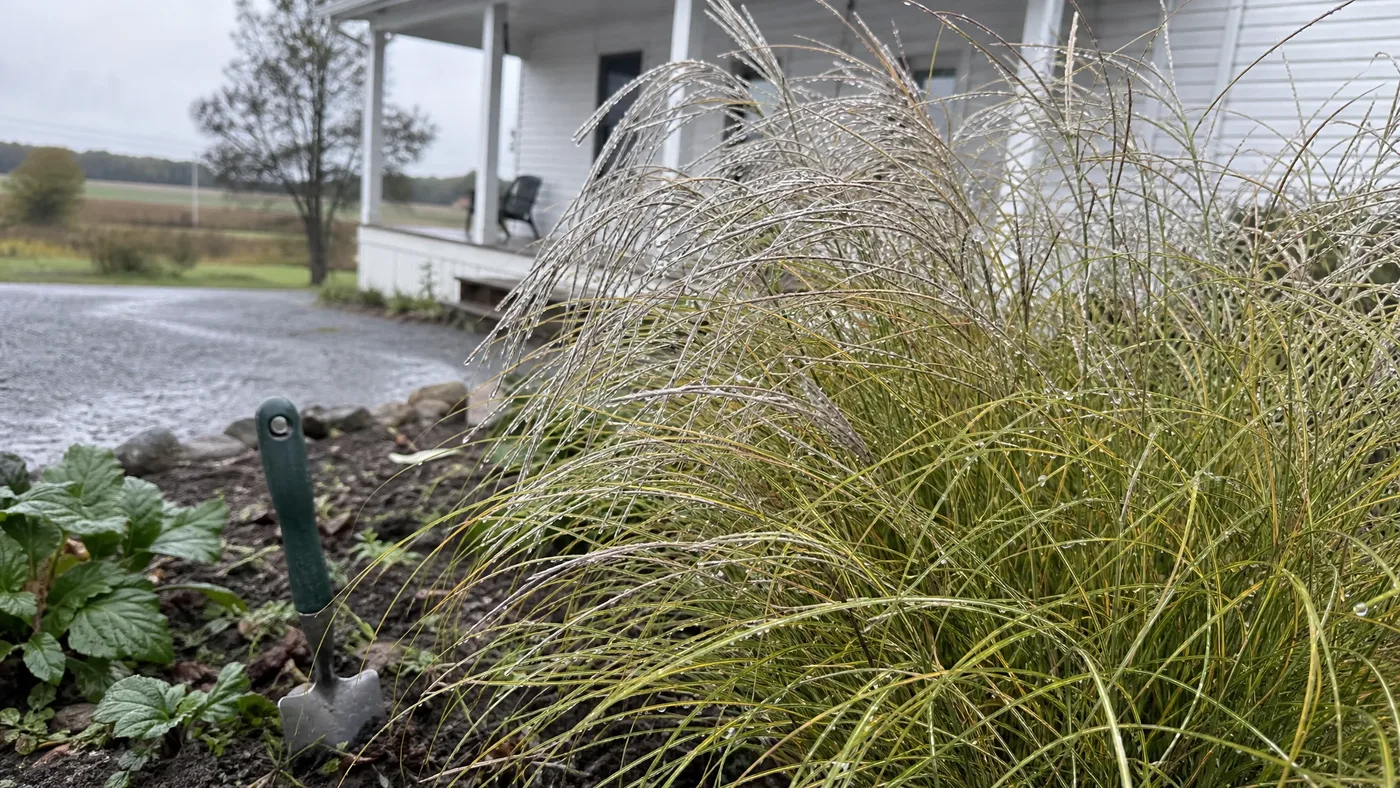
Little Kitten Maiden Grass Names: Eulalia and Botanical Name
It usually happens in early autumn, when the garden center benches fill with grasses just as their plumes turn silver. One pot is tagged "Little Kitten maiden grass," a second says "dwarf eulalia," and a third at the end of the aisle reads "Japanese silver grass." Three tags, three names, and you are sure only one of them can be right.
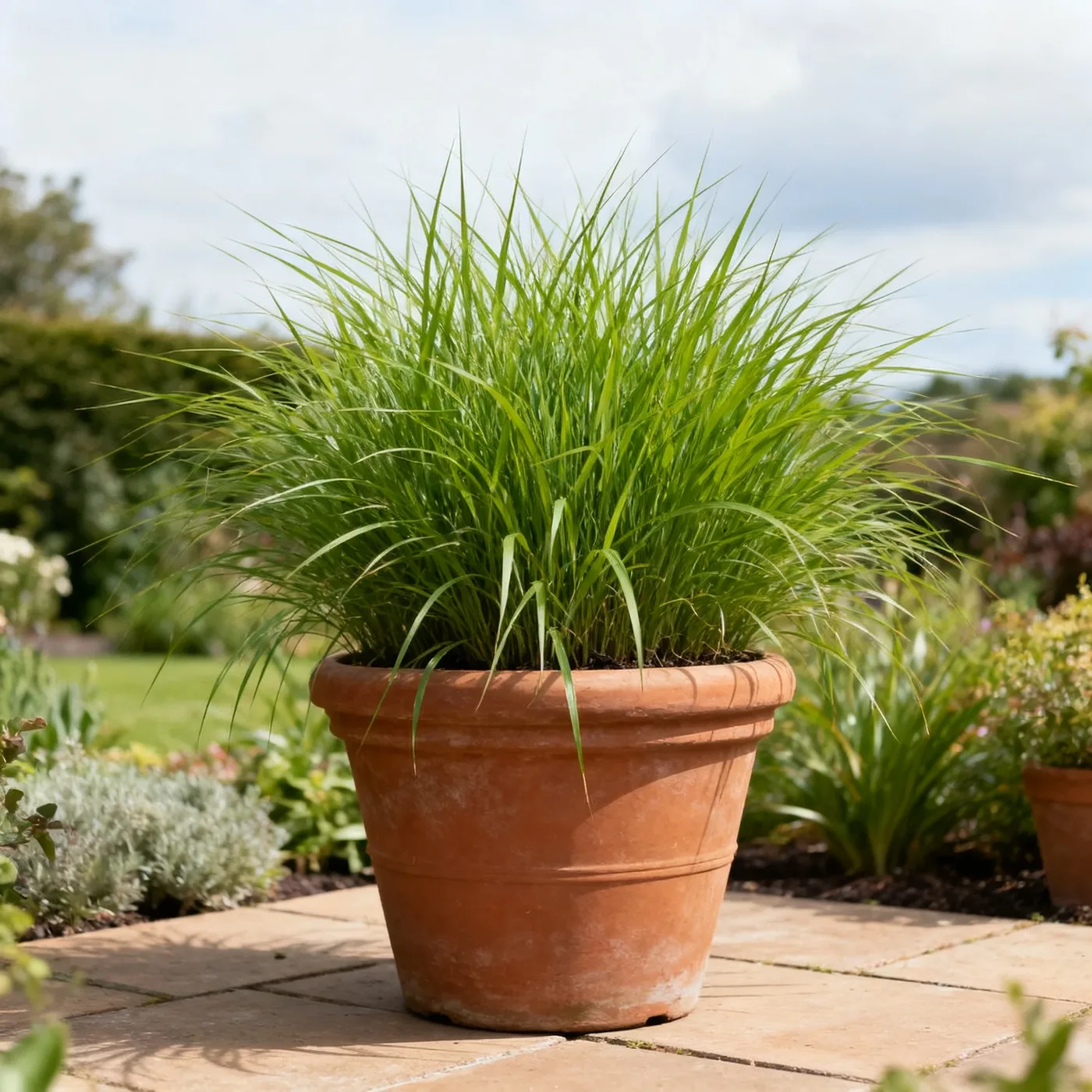
That confusion is normal, and all three tags can describe the same compact grass. It matters because a wrong guess sends you home with something far taller than you planned, or leaves you unable to find the plant you wanted. Read on for the story behind the old name eulalia, how maiden grass and Japanese silver grass attached themselves, how to read the botanical label, and how to match any listing to the right plant.
Eulalia Before It Was a Garden Plant
Eulalia is the oldest name on the list and the one that looks oddest on a tag. It is a common name for the whole species, Miscanthus sinensis, and the federal plant database ITIS lists eulalia and Chinese silvergrass as the common names under that species. When a seller writes "eulalia," they are pointing at the species, not at some other grass.
That species is a plant of Asia. It is native to eastern Asia, including Japan, Korea, eastern China and nearby islands, where it grows in open, sunny places. Gardeners elsewhere took it up for its arching leaves and feathery plumes, and the names traveled with it. Eulalia stayed in plant databases and botanical references, while catalogs leaned toward friendlier names like maiden grass.
Here is what that history means for you today. Little Kitten is not wild eulalia. It is a compact selection from that species, so the word eulalia tells you the family tree and nothing about size or plume color.
You may also read that eulalia can seed itself into wild areas. The records of that behavior concern the species, not the named cultivars, but if you garden beside natural land, ask your local extension service about your state's guidance before you plant.
How Little Kitten Maiden Grass Collected so Many Nicknames
Maiden grass is the name most nurseries use. It is applied loosely to the species and to the fine-leaved garden selections that come from it. The classic example is 'Gracillimus,' a graceful arching clump that reaches about 4 to 5 feet.
Little Kitten earns the name honestly. It is one of the shortest Miscanthus and looks a lot like a miniature 'Gracillimus,' with the same narrow, arching leaves in a much smaller package. Anyone who knows the tall plant spots the family resemblance at once, and sellers reached for the same name.
One of the most common questions we get is whether maiden grass and eulalia are two separate grasses. They are not. Maiden grass is the garden name, eulalia is the older plant-list name, and both land on the same species.
The rest of the nicknames are descriptions that sellers added. "Dwarf" and "compact" describe size, and "silver grass" describes the plumes. We cover those two in the next section.
One nickname deserves a warning. Maiden grass is often wrongly sold as pampas grass, which is a different plant. If a listing calls this grass pampas grass, do not trust the listing, and look for the botanical name instead.
Japanese Silver Grass and the Dwarf Tag
These two names turn up together on tags more than any others, and they say different things. One describes the plumes and the other describes the size. Neither one changes which plant is in the pot.
What Japanese Silver Grass Tells You
Silver refers to the plumes, which open in silvery tones and fade to a paler, feathery look that lasts into winter. Little Kitten's plumes are silvery-white, while the plain species is usually described as pinkish, so the silver name fits this cultivar especially well.
Japanese is about geography. Japan sits inside the species' native range, and Chinese silvergrass is simply the same species with a different country in the name. Japanese silver grass, Chinese silver grass and plain silver grass all mean Miscanthus sinensis. None of them names a particular selection, so they cannot confirm you are holding Little Kitten.
What the Dwarf Tag Really Means
Dwarf is a comparison, and the comparison is to the species, which commonly grows 4 to 12 feet tall. Little Kitten is 3 to 4 feet tall and about 3 feet wide, measured with the plumes. That is small for a Miscanthus, but it is not tiny.
Customers usually ask us whether dwarf means knee-high. It does not, so plan for a full clump that fills a good share of a small bed. Our guide on how big Little Kitten gets walks through the numbers by season.
Reading the Botanical Name of Little Kitten Maiden Grass
The full label reads Miscanthus sinensis 'Little Kitten,' and it breaks into three plain parts. Every common name above is a nickname for some part of it. The botanical name is the only one that stays the same from one seller to the next.
Miscanthus is the genus. It names a group of related grasses, and it is written with a capital letter and in italics. The group belongs to the grass family, Poaceae, and it is the reason plume-bearing ornamental grasses of this type look like cousins.
Sinensis is the species. It is lowercase and italic. The word points toward China, which is why references use Chinese silvergrass, even though the plant also grows wild in Japan and Korea. After the species name, plant databases add the surname Andersson, which credits the person who described it.
'Little Kitten' is the cultivar. It sits in single quotes with capital letters and no italics. The quotes tell you this is a named selection, not the wild species. More than 50 ornamental cultivars of this species are sold in the US nursery trade, so the quoted name is the part that separates your plant from all of them.
If a label drops the species and reads Miscanthus 'Little Kitten,' do not worry. The cultivar name still does the work. If it drops the quoted name and shows only Miscanthus sinensis, you are looking at the species or at some unnamed seedling, which can grow much taller.
What a Cultivar Name Promises Before You Plant
A cultivar name marks one selected plant whose traits people wanted to keep. It tells you what to expect from the plant in general terms. It does not guarantee an exact number of inches in your yard.
Size and Shape
The species runs from 4 to 12 feet tall. A selection called Little Kitten promises the opposite end of that range, a clump of about 3 to 4 feet tall and 3 feet wide. Plenty of sun, decent soil and regular water bring it toward the top of that range, while a dry or shaded spot holds it back.
What the name does not promise is a perfect fit for a tiny space. Measure for a clump about 3 feet across, and check our guide to other dwarf Miscanthus if you need something different.
Plumes and Timing
The cultivar name does promise silvery-white plumes that last a long time, and golden foliage in fall. It also shifts the clock. The species flowers from August to November in the Southeast, but Little Kitten blooms in mid to late autumn.
That timing varies with your climate and your season, so a cold, short summer can push plumes later still. Our bloom time and plume color guide shows what to expect and when.
Buying Little Kitten Maiden Grass Under Any Label
Shopping is where the names cause real trouble, because tags and online listings mix them freely. We often see listings that carry only a common name and a photo. A short routine sorts out almost every case.
- Look for the botanical name first. If it reads Miscanthus sinensis 'Little Kitten,' you have the right plant, whatever common name sits above it.
- Check for the quoted cultivar name. A tag that says only dwarf maiden grass could describe several compact selections, so ask the seller which one it is.
- Check the mature size. A listing that promises a screen of 6 feet or taller describes a different plant, because Little Kitten stays near 3 to 4 feet.
- Look at the plume color. Silvery-white fits Little Kitten, and a strongly pink or red description points elsewhere.
- Ignore any listing that says pampas grass. That is a different plant that merely gets confused with maiden grass.
If you are weighing it against a similar grass, our comparison of Little Kitten and Adagio shows how two compact Miscanthus differ. For container sizes and what to look for in a healthy pot, see our buying guide.
Little Kitten Maiden Grass by Every Name It Wears
Here are the names pulled together in one place, so you can tell at a glance which ones mean the exact plant and which ones only point at the species.
| Name you see | What it refers to | What it tells you |
|---|---|---|
| Miscanthus sinensis 'Little Kitten' | The exact cultivar | The only label that settles it |
| Little Kitten maiden grass | The cultivar, with its common name | The same plant as above |
| Dwarf maiden grass | A size description | Compact, but not always this cultivar |
| Eulalia | The species, in older and database use | Family tree only |
| Japanese silver grass, Chinese silver grass | The species again | Silvery plumes, native to Asia |
If a name sits in the lower rows, it describes where the plant comes from. If it sits in the top rows, it names the plant you are getting.
Whatever the Tag Says, It Is Little Kitten Maiden Grass
Eulalia, maiden grass and silver grass are all names for Miscanthus sinensis or for a compact selection from it, and the quoted name 'Little Kitten' is what picks out your plant. Whichever name you found it under, you are looking at the same compact plant, about 3 to 4 feet tall with silvery-white plumes, and you can order with confidence.
Little Kitten Maiden Grass
Nursery-grown Little Kitten Maiden Grass in sizes from 3 Gallon, shipped to your door.
From $69.97
Shop Now →Full sun on our farms is where Little Kitten spends its life with us, and we pot and pack each one so it reaches you ready to plant. Small as we are, we're a team of growers who raise every top-quality grass, shrub and tree we sell, so the name on the tag is the plant in the pot. Whichever of these names you searched, begin with one of ours.