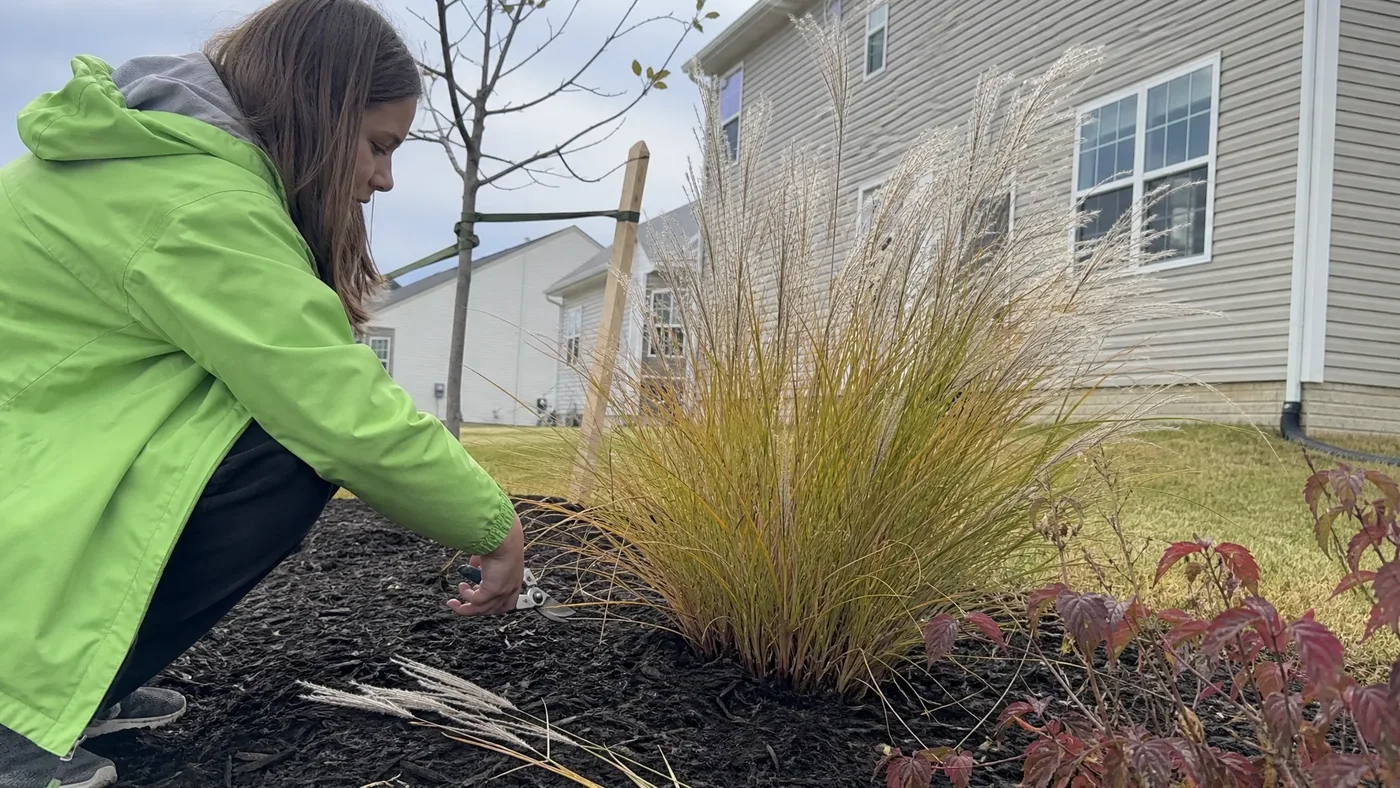
Cutting and Drying Little Kitten Maiden Grass Plumes
Stand over a Little Kitten plume with a pair of snips and the first thought is usually that it's too small to bother with. It's about the size of a bottle brush, and the common belief is that a dried plume only counts if it can fill a vase. We've held the snips over that same plume ourselves. What we see instead is that the small size is the whole appeal, because a bundle of these silvery-white plumes fits places a big plume never could.
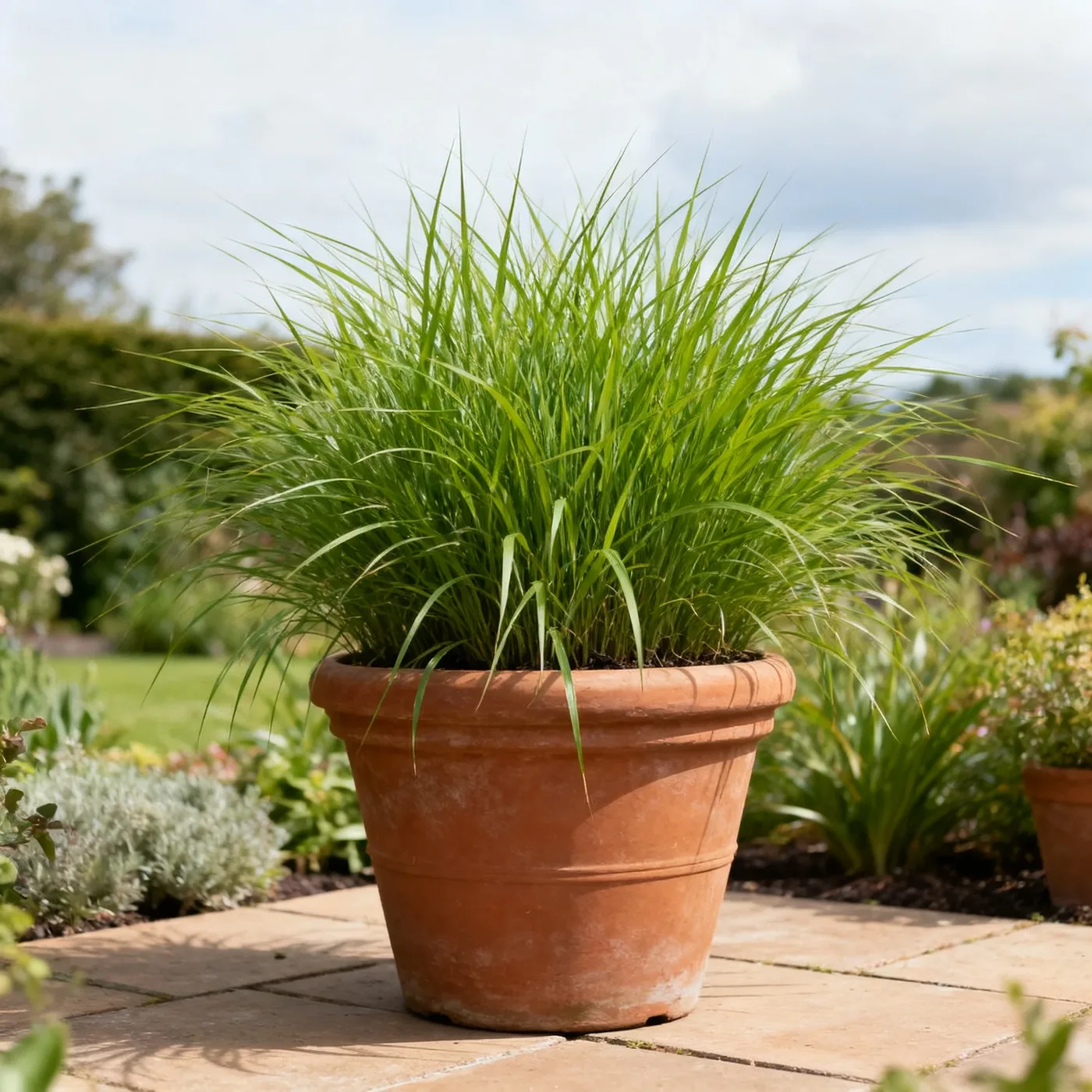
Done right, the plumes stay put and keep their color all winter. Done badly, they turn to fuzz on your floor or go musty in a damp bundle.
We'll walk you through judging peak color and gathering your gear, then cutting, stripping, bundling and hanging, and finally setting the plumes so they stop shedding and putting them to work.
Judging Little Kitten Maiden Grass Plumes at Peak Color
Little Kitten blooms in mid to late autumn, later than the species, and its plumes come in silvery-white where many maiden grasses run pinkish. That puts your cutting window in the cold end of fall, and it moves with your weather. Our bloom time and plume color guide covers the calendar, but for this job you read the plant, not the date.
What Peak Looks Like
Peak is the day the plume has fully opened and turned silvery-white while its branches still lie close to the central stem. Squeeze one gently between two fingers. It should feel feathery and springy, and nothing should come off on your skin. Past that point the branches loosen and puff out, and every touch sheds fluff. A fluffier plume is not a better one for drying, just a messier one.
Look Under the Foliage
K-State notes that the blooms are numerous and held closer to the foliage than on many other Miscanthus. You can't judge from across the yard the way you can with a tall grass. Walk up, part the blades with your hand and look at the plumes from the side.
Also drop any expectation of size. The species carries plume branches up to 8 inches long, while Little Kitten's whole plumes are only a few inches. Waiting for them to get bigger just means waiting until they shed. Judge on color and tightness.
Gather Snips, Twine and a Dry Afternoon
You need very little, and customers usually ask us whether they need special equipment. They don't. A pocketful of gear covers the whole job, and you can set it up in ten minutes.
- Sharp bypass pruners or snips, so each stem is cut cleanly and not crushed.
- Gloves, because the blade edges are rough enough to slice a finger.
- Twine for tying, plus a few rubber bands, since stems shrink as they dry and twine goes slack.
- A flat basket or tray, so the cut stems lie down together and the plumes don't get bent.
- Something to hang from, such as a line, a row of hooks or a clothes hanger with clips.
The weather matters more than the tools. Pick an afternoon after the dew and any rain have fully dried off, and ideally a calm one. A wet plume carries moisture into the bundle and can mold before it dries, and a gusty day strips fluff off before you even reach the basket.
Clear your hanging spot before you cut. Once the stems are in the basket you want to tie and hang them the same day, not leave them in a heap on the porch.
Cutting Little Kitten Maiden Grass Stems Low and Clean
A lot of advice says to cut the whole clump down when you harvest in fall. We don't follow that. Take the plumes you want and leave the rest standing. Miscanthus is noted for silky flower tassels that persist into winter, and the clump still has a job as a golden, rustling shape in the bed until late winter. The real cutback comes then, as we explain in when and how to cut back Little Kitten.
Making the Cut
Because the plumes sit low in the foliage, you cut near ground level, down inside the clump. That's where the longest stems are, and you can always shorten a stem later but never lengthen one. Work like this:
- Part the blades and follow a plume stem down to where it leaves the clump.
- Cut at a slant, as low as you can reach, so the stub hides behind the foliage and sheds rain.
- Make one clean cut. Sawing or twisting frays the stem end and makes it harder to tie.
- Lay each stem in the basket with the plumes all pointing the same way.
- Move around the clump as you go, so you don't leave one side bald.
Leaving the Clump Healthy
Take plumes evenly and leave most of them. The clump needs nothing afterward: no feeding, no extra water, no cover. Our winter care guide covers what the plant wants from here until spring, which is mostly to be left alone.
Stripping the Leaves and Bundling Small
Grasses are naturally dry and need little processing before arranging, and that's the good news here. The only prep is taking off the blades. Hold the stem just below the plume with one hand and pull the blades downward with your gloved other hand, away from the plume so you don't disturb it. Blades hold moisture longest, and one damp blade can spoil a whole bundle.
Tie Bunches Small
Keep each bunch no thicker than your thumb. Small plumes packed into a fat bundle press against each other, trap moisture in the middle and dry unevenly, with a crisp outside and a damp core. Several thin bundles dry faster and look better than one heavy one.
Slide the stems up and down against each other before tying so the plumes sit staggered and don't crush together. Wrap twine twice around the stems about halfway down, tie it off, and leave a long tail to hang from.
Plan to come back in a few days and snug the tie. When the stems shrink, a loose bundle slides apart and drops plumes on the floor. A rubber band over the twine handles this without any fuss.
Hanging Little Kitten Maiden Grass Plumes Upside Down
Hanging upside down keeps the stems straight as they dry, so the plume stays on top of a stiff stem and doesn't flop to one side later. It's also the easiest setup there is: a hook, a line or a hanger, and the right room.
Pick the Spot
You want a cool, dark place with good air circulation. A closet, a spare room, a garage rafter or a dry attic with some airflow all work. Direct sun dulls the silvery-white color, so a sunny windowsill is the wrong choice. Damp basements are wrong too, since still, humid air is exactly how bundles mold.
Hang Them With Room
Leave a hand's width between bundles so air moves around every plume. If the room is stuffy, a small fan running in the corner helps. Keep the plumes away from radiators, heat vents and ovens as well. Fast heat makes a stem brittle on the outside while the inside stays damp, and you won't find out until the wreath starts to smell.
Hang the bundles with the plumes pointing straight down and nothing brushing against them. A plume pressed against a wall dries with a flat spot, and with a plume this small there's no hiding it.
How Long Drying Really Takes
Purdue Extension suggests hanging cut stems in a cool, dark place with good air circulation for about three weeks. That's a safe working number for Little Kitten. Thin grass stems in a dry room can finish sooner, and a humid room can take longer, so don't set a date. Test the bundles instead.
Start checking at the two-week mark. Pull one stem from a bundle's middle, since the middle is always the last part to dry, and compare it against this:
| What You Check | Still Drying | Done |
|---|---|---|
| Stem | Bends, feels cool to the touch | Snaps cleanly with a dry crack |
| Plume | Slightly heavy, branches cling together | Light, springy and silvery |
| Twine | Still tight | Slack, ready to retie |
| Smell | Faintly grassy or damp | No smell at all |
If you can't decide, wait another few days. Putting slightly damp stems into a wreath or a closed box is the usual way a good harvest gets ruined. A done bundle rustles when you shake it, and that's the sound you're after.
Tiny Plumes Shed Fluff: Setting the Seed Heads
A Miscanthus plume is a seed head, and even a dry one keeps loosening. On a plume this small it shows up as fine fluff on every surface it touches. In our rows, a plume cut a week too late is the one that leaves a trail of fluff across the truck seat. Cutting at peak color helps most, but setting the plumes finishes the job.
Seal Them Lightly
Take the dry bundles outdoors or into the garage. Hold one upside down at arm's length and mist it with unscented hairspray or a clear matte craft sealer. Use a light coat, let it dry, then give a second light coat. Don't soak them. Too much product mats the branches together and turns the silver a dull gray.
Choose matte over gloss, since a glossy finish makes soft plumes look like plastic. Keep sealed bundles away from candles and open flame, because hairspray is flammable.
Handle Them Gently After
Let the plumes dry fully before you touch them. After that, move them by the stem and avoid stroking the plume. A sealed plume won't stop shedding forever if you rub it, but it will hold its shape through a winter of normal handling.
Little Kitten Maiden Grass Plumes in Small Arrangements and Wreaths
The plumes are a few inches long, so use them where a small plume suits the scale. Tuck a few stems into a bud vase or a jam jar. Set single plumes at each place at the table. Tie a small bundle to a gift with the twine you already used. A cluster beside a candle holder works well too, as long as the flame is well away from the plumes.
Building a Small Wreath
For a wreath, start with a wire or grapevine ring and wire on small clusters of plumes, overlapping each one over the stems of the last like shingles, all angled the same direction. The stems hide behind the next cluster and the plumes fill in as you go. Evergreen sprigs and dried seed pods go well with silvery-white, and both dry on their own. Our landscape ideas and companions guide shows what grows nearby in the bed.
Hang a finished wreath indoors, out of rain and out of bright sun, and handle it as little as possible. Cut early, dry well and set the plumes, and it will last the whole winter.
A Little Kitten Maiden Grass Bundle in January
The job comes down to six moves: cut at peak color on a dry day, cut low and clean, strip the blades, tie small bunches, hang them in the dark with air around them, and seal lightly once they snap. Skip any of those and the plumes either shed or mold. Do them in order and each one makes the next easier.
It's a small harvest, and it feels like one when you're standing in the cold with snips. But a small bundle on the wall in January is the payoff for one cold afternoon with snips.
Little Kitten Maiden Grass
Nursery-grown Little Kitten Maiden Grass in sizes from 3 Gallon, shipped to your door.
From $69.97
Shop Now →Little Kitten grows on our farms in full sun, and that sunny start is how it sets the silvery plumes you have been learning to cut and dry. Our growers look over every crown and the foliage before a plant goes out, because a healthy clump is what gives you a harvest. We are a small team of growers working our own farms to raise top-quality grasses, so if you would like plumes to bring indoors from your own garden, pick out a plant that suits you.